
Destination · Southern Thailand
Krabi
- Airport
- Krabi (KBV)15 km to town, 25 km to Ao Nang
- Best months
- Nov–MarDry, and the sea is calm enough for the islands
- Temperature
- 24–32°CNear enough all year. The season is about rain
- Nights to allow
- 3 to 4At least two of them on the water
- Currency
- Thai bahtCash at every pier and park gate
Krabi is not one place. Limestone comes straight out of the sea along this coast, and four quite different bases sit underneath it — a walkable strip, a peninsula with no road to it, a run of quiet resorts, and a working river town. Which one you choose decides the shape of the whole trip, so choose it before you choose the hotel.
Decide first
Four bases. Only one of them is yours.
Ao Nang
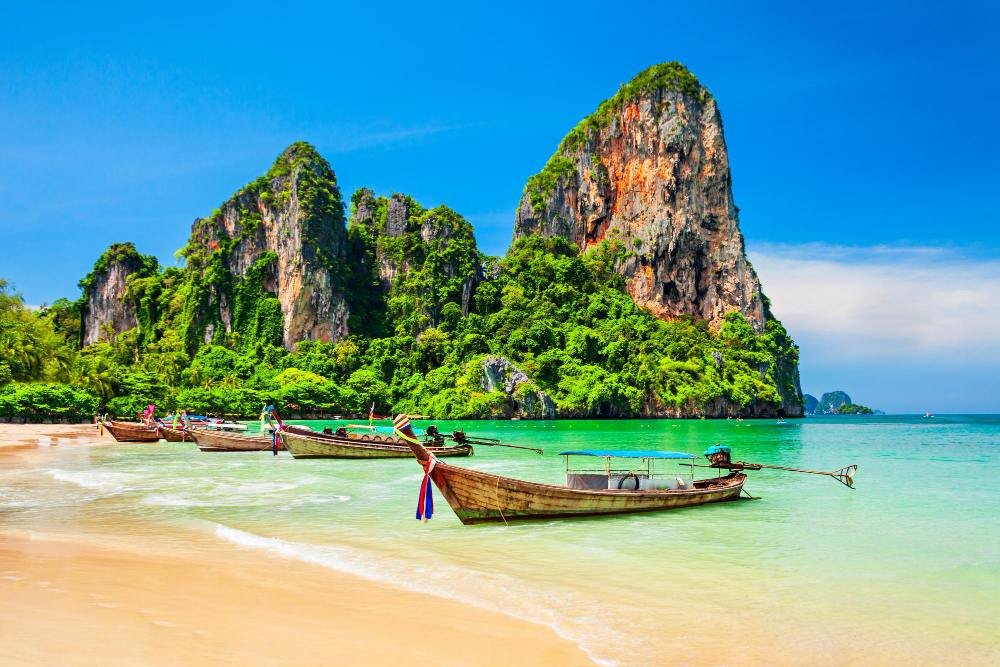
The default, and for a first trip to Thailand the right default. One street back from the sand there are restaurants, pharmacies, dive shops, tailors and a 7-Eleven every couple of hundred metres. The boats to Railay leave from the beach itself, so you are never more than fifteen minutes from somewhere quieter.
Choose it if
- This is a first trip to Thailand
- You want to walk to dinner
- You are travelling with parents
- You plan an island day most days
Think twice if
- You came for the beach itself — this is the weakest of the four, and you swim off the islands rather than here
- You want quiet after dark
Railay
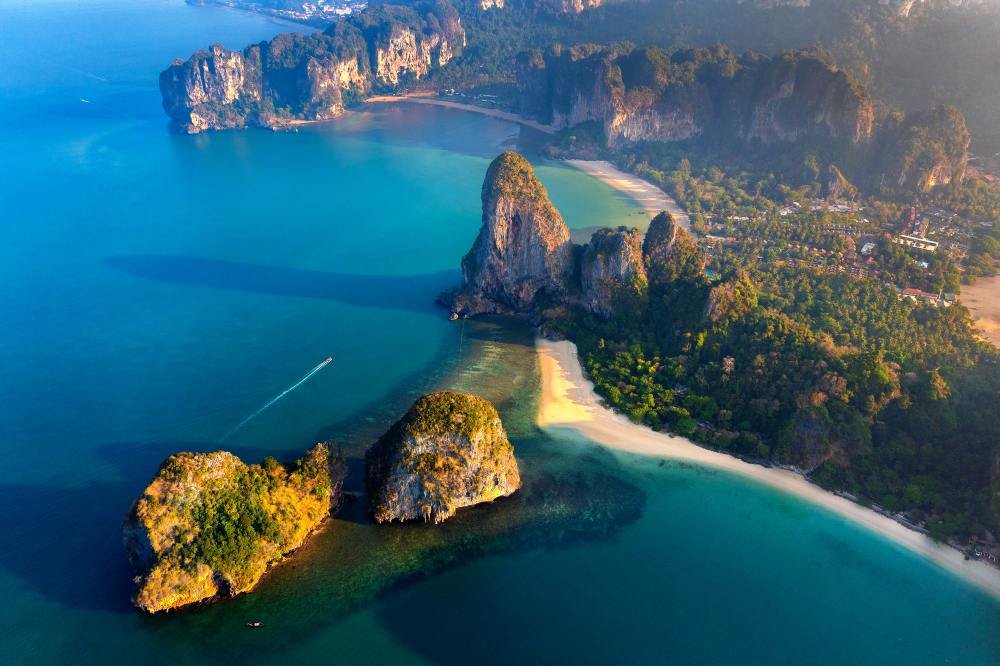
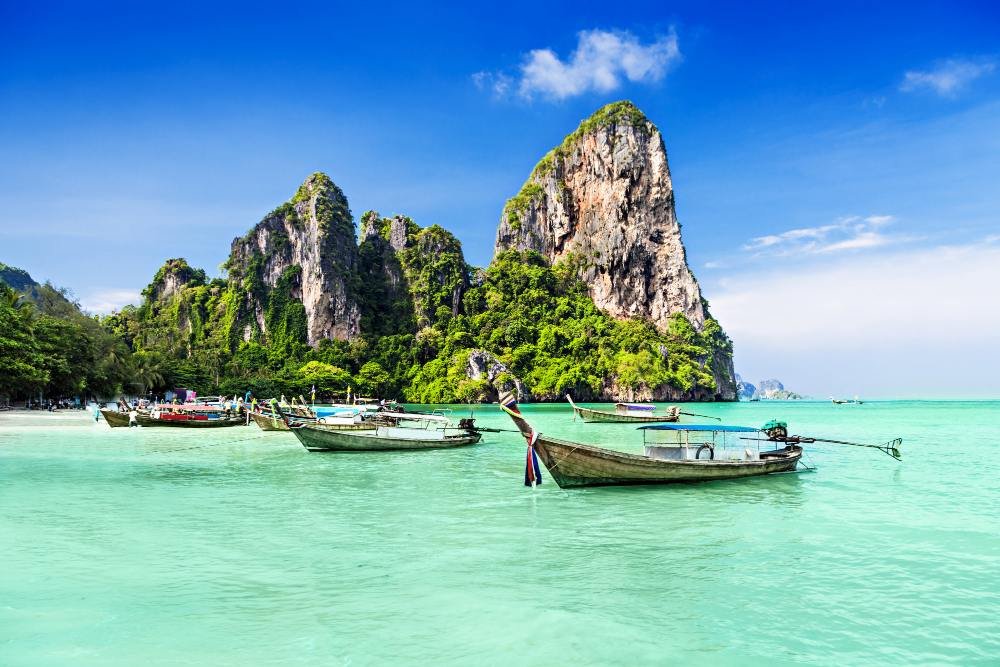
No road reaches Railay. You arrive by longtail from Ao Nang or Ao Nam Mao, and when the day boats pull out around four the peninsula empties out with them. Four beaches sit on one small headland: Railay West for swimming and the sunset, Phra Nang for the best sand in the province, Railay East for cheaper rooms and the mangrove, Tonsai for climbers.
Choose it if
- It is a honeymoon
- You climb, or want to learn
- Being cut off is the point
- You will stay put for three or four nights
Think twice if
- Every arrival and departure depends on tide and weather
- Boats beach rather than dock — you step into shin-deep water with your luggage
- Mobility is limited, or you are travelling heavy
- Railay East is mudflat at low water
Klong Muang & Tubkaek
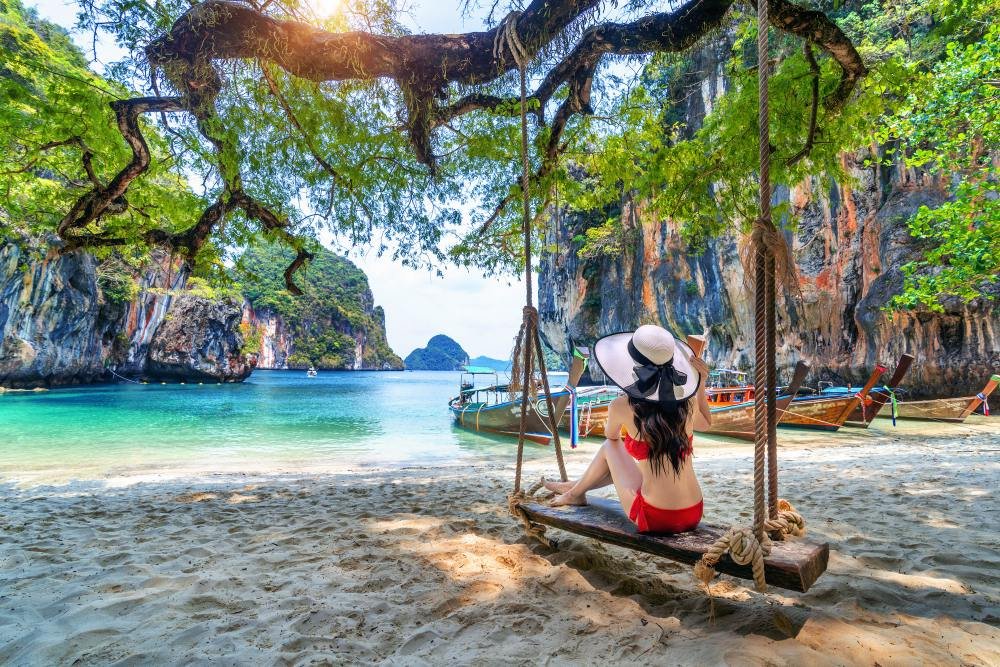
Twenty minutes north of Ao Nang and a different holiday. Resorts sit back from a flat, shallow shoreline looking west at the Hong group, which means the sunsets have islands in them. The pier at Tubkaek is the shortest crossing to those lagoons — you can be in one before the Ao Nang boats have finished loading.
Choose it if
- You are travelling with young children
- You want a resort you do not intend to leave
- The Hong Islands are the reason you came
Think twice if
- There is almost nothing outside the hotels — you will eat where you sleep
- Every trip out needs a taxi
- The water goes a long way out at low tide
Krabi Town
The province’s actual town, on the Krabi River, and the only base here that was not built around visitors. Rooms are the cheapest in the province and the food is the best value — the walking street by Chao Fa pier runs Friday to Sunday evening and is aimed at locals first. There is no beach, and that is the whole trade.
Choose it if
- You need a night either side of a flight
- Budget is doing the deciding
- You want to eat where nobody is performing for you
- You are moving on by bus or ferry
Think twice if
- Every beach day starts with a thirty-minute drive
- It is quiet after nine
Three days on the water
The islands, ranked by how far you have to go.
-
The Four Islands
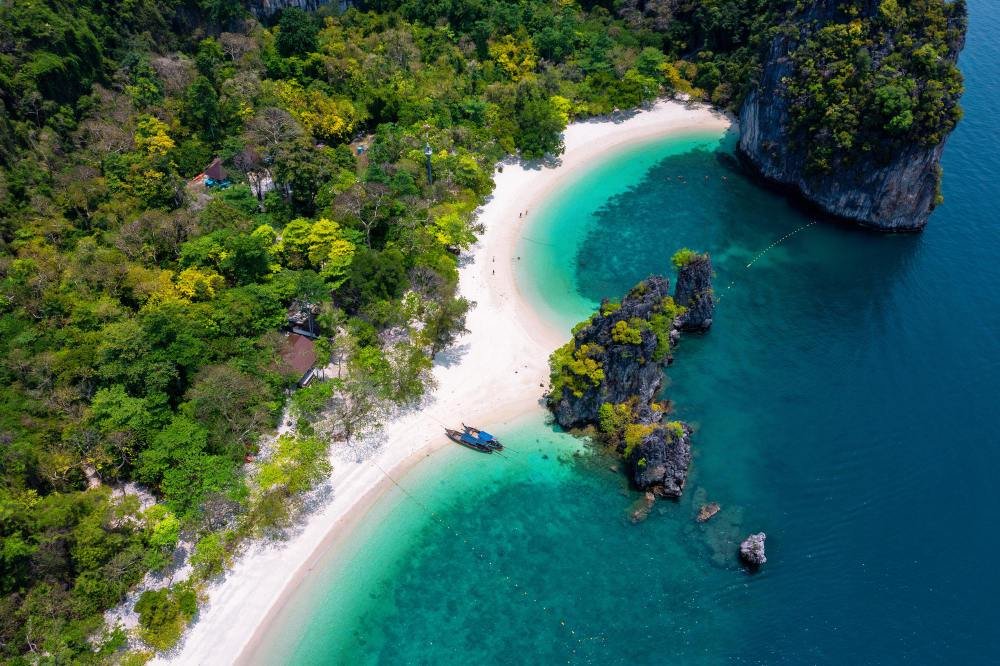
Koh Poda, Chicken Island, Tup and Phra Nang. At low water a sandbar surfaces and you walk between two of them on dry sand. The half day leaves after lunch and gets you back for sunset; the full day gets you there before everybody else does.
- Time
- Half or full day
- Boat
- Longtail or speedboat
- Park fee
- ฿400 / ฿200
-
The Hong Islands
The lagoon at Koh Hong is the one everybody photographs, and the viewpoint above it is fifteen hard minutes of steps. Go early. By eleven there can be twenty boats in the same piece of water, and it stops being the place in the picture.
- Time
- Full day
- Boat
- Speedboat
- Park fee
- ฿300 / ฿150
-
Phi Phi
Two hours out and two hours back, so it is a long day rather than a relaxed one. Maya Bay is open again under rules — you land at the back of the island and you do not swim in the bay — and it closes to visitors for part of the low season. Worth one day. Not worth moving hotels for.
- Time
- Full day, about 10 hrs
- Boat
- Speedboat, 2 hrs each way
- Park fee
- ฿400 / ฿200
Decide second
When to come, month by month.
The temperature barely moves all year. What changes is the rain and the sea — and the sea is what decides whether the island days happen. The bar on each month is its typical rainfall.
Bar height is that month’s typical rainfall; the symbol above it is the weather you should expect, and the figures below it how busy the beaches get. Pick a month to read it in full.
Peak season
January
The best month, and priced accordingly. Dry, low humidity, and a sea flat enough that every island runs every day. Book the hotel months out; the good rooms on Railay go first.
- Typical rain
- 25 mm
- Sea
- Calm
- Crowds
- Highest
Peak season
February
January’s weather without quite January’s prices. Still dry, still calm, and the light is at its cleanest for photographs. If you can only travel in high season, this is the month to aim for.
- Typical rain
- 25 mm
- Sea
- Calm
- Crowds
- High
Very good
March
Hot — genuinely hot by the end of it — but still dry and still calm. Peak-season conditions with the crowd thinning out and rates easing. Start the Tiger Cave climb at first light this month, not at eight.
- Typical rain
- 60 mm
- Sea
- Calm
- Crowds
- Easing
Hot, mostly dry
April
The hottest month of the year, with the first afternoon storms arriving late in it. Songkran falls mid-April: the Thai new year, three days of organised water-throwing, and a national holiday — which means full hotels and busy roads as well as a good time.
- Typical rain
- 130 mm
- Sea
- Mostly calm
- Crowds
- Songkran spike
Monsoon arrives
May
The southwest monsoon sets in and the Andaman changes character. Rain tends to come in heavy bursts rather than all day, so a trip still works — but boat days start getting cancelled, and the outer islands begin closing for the season.
- Typical rain
- 300 mm
- Sea
- Getting rough
- Crowds
- Low
Green season
June
Cheapest rooms of the year and the landscape at its greenest. Mornings are often clear and the rain comes later in the day. Plan the inland trips — the pools, the hot springs, the temple — and treat any island day you get as a bonus.
- Typical rain
- 250 mm
- Sea
- Rough at times
- Crowds
- Low
Green season
July
Much like June, and busier than the weather warrants because it is the European summer. Good value if you are relaxed about the itinerary and take the boat days as they come.
- Typical rain
- 260 mm
- Sea
- Rough at times
- Crowds
- Moderate
Green season
August
Wet, and Maya Bay is shut for its annual recovery period. Krabi itself still works — the cliffs look their best under moving cloud — but do not build the trip around Phi Phi this month.
- Typical rain
- 290 mm
- Sea
- Rough
- Crowds
- Moderate
Wettest month
September
The wettest month of the year and the one we would talk you out of if the islands are why you are going. Boat cancellations are common and some operators stop running altogether. If the dates are fixed, go inland and go cheap.
- Typical rain
- 380 mm
- Sea
- Rough
- Crowds
- Lowest
Turning
October
Still wet, but the monsoon starts letting go towards the end of the month and the islands reopen one by one. A gamble: the last week of October can be as good as November at half the price, or it can rain.
- Typical rain
- 320 mm
- Sea
- Settling
- Crowds
- Low
Season opens
November
The rain drops away, the sea settles, everything reopens, and the prices have not caught up yet. For value against conditions this is the best month of the twelve, and it is the one we book most often.
- Typical rain
- 180 mm
- Sea
- Calming
- Crowds
- Building
Peak season
December
Excellent weather and the busiest fortnight of the year over Christmas and new year, when rates roughly double and minimum stays appear. The first half of December is the same weather without the surcharge.
- Typical rain
- 60 mm
- Sea
- Calm
- Crowds
- Very high
Decide third
How long, and what shape.
Three shapes we actually sell. The nights are real and so is the pace — each one is a starting point we rebuild around who is travelling, not a fixed menu.
1 night · 2 days
Touch & Go
One night is one decision: the water or the limestone. We build the day around whichever you would regret missing, and we do not pretend there is time for both.
-
Day 1
Land, and go straight across to Railay
KBV to Ao Nang is 30–40 minutes. Drop the bags, take the longtail across for Phra Nang cave beach, and come back to Railay West for the sunset. Dinner is a hundred metres of the Ao Nang strip.
-
Day 2
Four Islands, then out
The longtail leaves early and is back by two, which an evening flight can take. If you would rather stay dry, Tiger Cave Temple and the Emerald Pool fill the same hours inland.
One night means one water day and no margin. If the sea is closed for weather there is no second chance, so we would move you inland rather than send you out in it.
2 nights · 3 days
Quick Getaways
The short break that still gets you on the water twice, from two different piers, without a single early start you did not agree to.
-
Day 1
Arrive, and do nothing on purpose
Transfer to Ao Nang and keep the afternoon empty. Cross to Railay West late for the sunset if the flight lands early enough; otherwise the beach is two minutes away and that will do.
-
Day 2
The Four Islands, by longtail
Chicken Island, Tup, Poda and Phra Nang. If the day falls on a low tide you can walk the sandbar between Tup and Chicken, which is the photograph everyone comes back with. Back by mid-afternoon.
-
Day 3
The Hong lagoon, from the short pier
Leaving from Tubkaek rather than Ao Nang puts you inside the lagoon before the main fleet has finished loading. If you have had enough salt, the Emerald Pool and the Klong Thom hot springs are the inland alternative. Evening transfer out.
Two nights is the shortest stay we would call a holiday here. It survives one bad-weather day; one night does not.
4 nights · 5 days
Destination Deep Dive
Two bases, three days on the water, and the one thing almost every visitor misses — Railay after four o’clock, when the day boats have gone and the peninsula belongs to whoever stayed.
-
Day 1
Arrive, Ao Nang
Nothing scheduled. Walk the strip, find the pharmacy and the 7-Eleven, watch the longtails come in.
-
Day 2
The Four Islands
The full day rather than the half. Snorkelling off Poda, lunch on the sand, and the sandbar if the tide gives it to you.
-
Day 3
Phi Phi, early
By speedboat, and early enough to be at Maya Bay before the Phuket boats arrive. Bamboo Island on the way back. This is the longest day of the trip and the one worth the alarm.
-
Day 4
Cross to Railay
A morning of moving, and then two nights with no road out. The afternoon is yours: climb, learn to climb, or lie on Phra Nang and watch other people do it. Stay for the sunset — that is what you moved for.
-
Day 5
The Hong Islands, on the way out
Or Tiger Cave’s 1,237 steps and the Emerald Pool if you want the trip to end on land. Transfer to KBV from wherever you finish.
Changing base costs you a morning. It buys the only version of Railay that is quiet, and it is the reason we build this one at four nights rather than three.
Inland
What you pay at the gate.
| Where | Adult | Child |
|---|---|---|
| Four Islands and Phi Phi Hat Noppharat Thara – Mu Ko Phi Phi National Park | ฿400 | ฿200 |
| Hong Islands Than Bok Khorani National Park | ฿300 | ฿150 |
| Emerald Pool and the Blue Pool | ฿200 | ฿100 |
| Klong Thom hot springs | ฿90 | ฿40 |
| Tiger Cave Temple 1,237 steps, and no shade on any of them | Free | Free |
Worth knowing
Six things we would tell you on the phone.
-
The tide runs your day
Railay East is a mudflat at low water. The sandbar between Tup and Chicken Island only exists at low water. Longtails beach rather than dock, so you step off into the sea either way. Ask which tide your day is built around.
-
Carry cash for the gates
Park fees, the hot springs and most longtail hires are cash only, in baht. ATMs on Railay charge a fee for every withdrawal, so draw what you need before you cross.
-
The monkeys at Phra Nang
They take bags, not just food, and they are quick. Nothing loose, nothing shiny, and do not hold food where one can see it.
-
Longtail or speedboat
A longtail is cheaper, slower, open and much wetter. From November to March either is fine. Outside that window take the speedboat, or take the day off.
-
Tiger Cave at first light
1,237 steps with no shade. Start at six and it is a good walk; start at nine and it is an ordeal. It is a working temple, so shoulders and knees covered.
-
Believe the flags
Box jellyfish are present in the Andaman. Vinegar stations stand on the main beaches for a reason. If a red flag is up, the day is for the pool.
For Indians
Entry requirements
- Route
- Visa exemption
- Maximum stay
- 30 days
- Fee
- None
When this starts India was moved to this 30-day exemption by the Thai Cabinet on 16 July 2026. It commences 15 days after the Ministry of Interior announcements are published in Thailand’s Royal Gazette. We confirm in writing which rule applies to your travel dates before you fly, and we will not let you travel on the wrong one.
Every traveller must also file the Thailand Digital Arrival Card (TDAC) online within 72 hours of arrival. It is free, and airlines check it at the gate — without it you will not be allowed to board.
Applies to Indian passport holders. Last reviewed 12 August 2026. Entry rules change; we confirm the current position at the time of booking.
Packages through Krabi
2 packages
Pairs well with
Krabi is two hours from most of the south.
-
Phang Nga Bay
The bay with the standing rock in it. A long day from Krabi, or a night in a raft house if you would rather see it at dawn without a hundred other boats.
-
Koh Lanta
Two hours by ferry and considerably slower in temperament. Long flat beaches, sunsets over open water, and nothing much to do — which is the appeal.
-
Phuket
Two to three hours by road. More flights, more nightlife, more choice of hotel. Easy to fly into one and out of the other rather than doubling back.
-
Koh Phi Phi
Better as a night than a day trip if the island itself interests you. The bays at seven in the morning, before the speedboats arrive, are a different place entirely.
Krabi, without the 6am start.
Tell us who is travelling and which of the four bases suits you. We will build the rest around the tides.